

The Eba Academy
- Provides unparalleled access to industry-proven learning content, training programmes, experts, educational technology and certification
- Convenes the knowledge and experience of EIT InnoEnergy 500 key players from 18 different countries into a single but comprehensive learning service
- Upskill and reskilling existing workforce and/or recruitments lacking battery know-how
- Strong focus on distance learning tools and E-Learning – embedded in the European Battery Alliance network and all its industry partners
Powered by




- Provides unparalleled access to industry-proven learning content, training programmes, experts, educational technology and certification
- Convenes the knowledge and experience of EIT InnoEnergy 500 key players from 18 different countries into a single but comprehensive learning service
- Upskill and reskilling existing workforce and/or recruitments lacking battery know-how
- Strong focus on distance learning tools and E-Learning – embedded in the European Battery Alliance network and all its industry partners
INNOENERGY developed the EBA Academy content with the support of strategic stakeholders for the request of the European Commission and developed content since 2019.
EBA Academy is providing training and skills solutions for the whole battery value chain as new and strong strategic industrial pillar evolving across Europe
TRIGO signed a global cooperation contract to deliver EBA Academy as part of it’s service portfolio
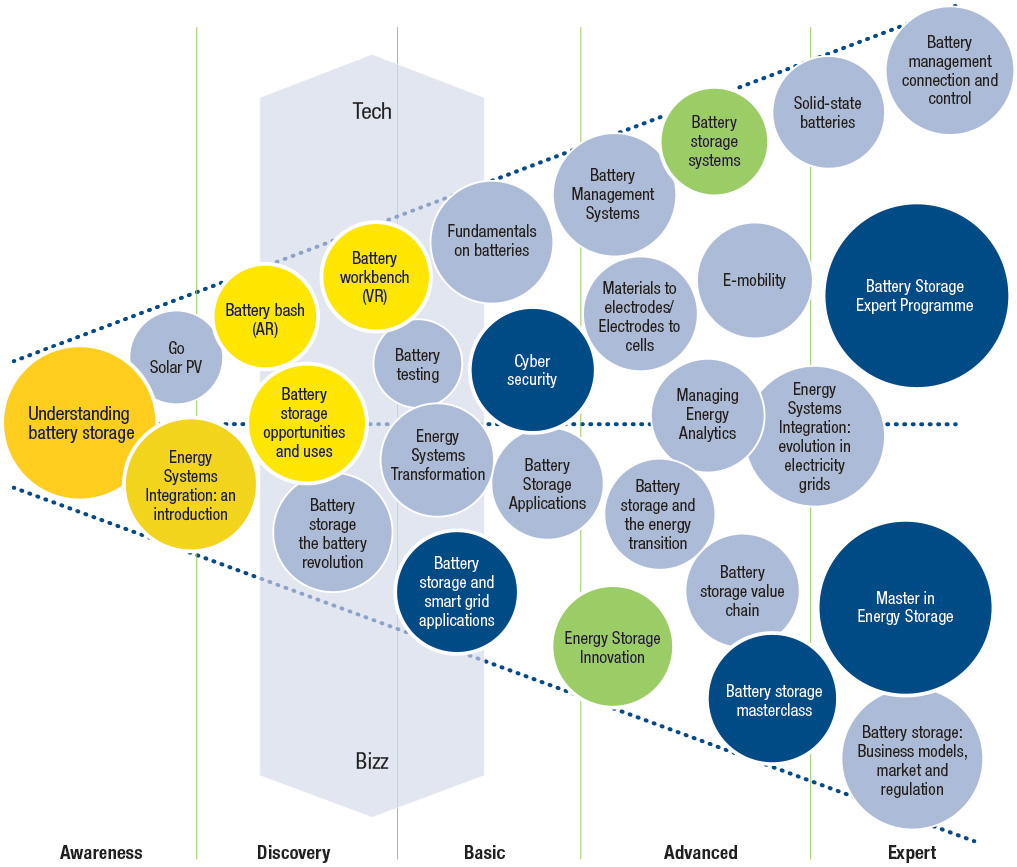
EIT INNOENERGY CURRENTLY OFFERS
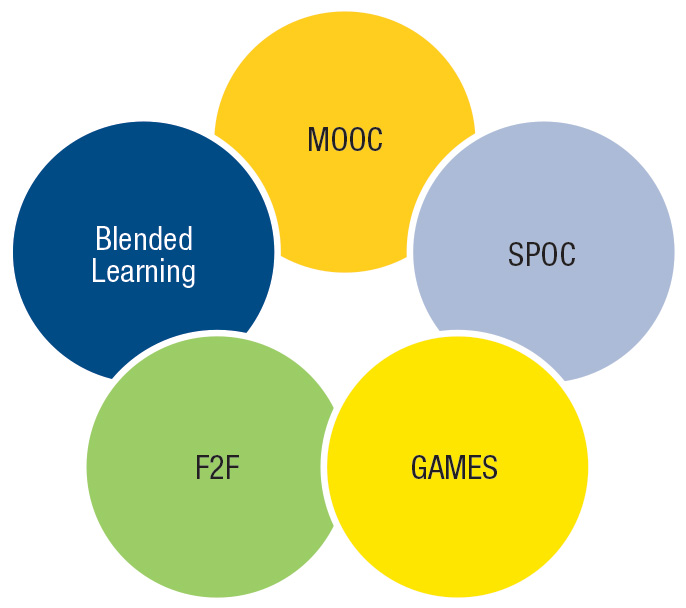
METHODS
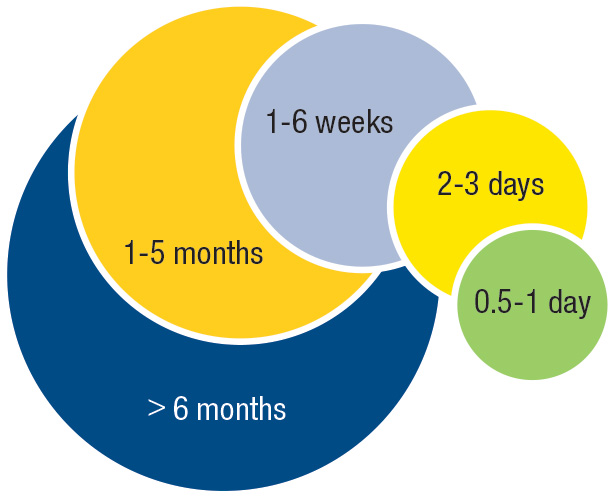
DURATION
KEY METHODOLOGIES
Social Learning
Immersive Games
Challenge Based Learning
TRAINING ROADMAP
- Energy System Transformations
- Understanding energy storage: the Battery Revolution
- Energy Systems Integration: Evolution in Electric Grids
- Introduction to solid-state batteries
- Materials to Electrodes
- Battery Storage Basics
- Battery Storage Business Models, Market and Regulation
- Battery Management, Connection and Control
- Battery Storage Applications
- Power Convertors and Efficiency Battery Applications
- Battery Testing
- Battery Management Systems
- Battery Storage Value Chain
- Fundamentals on Batteries
- Battery Storage and Energy Transition
- Battery Technician
- Power convertors and efficiency in battery applications
- Electrodes to Cells
EBA ACADEMY LEARNER PROFILES
Group A
Priority – Technical aspects
- Production worker (performs both mechanical and electrical tasks)
- Battery service technician/electric vehicles (non-engineer)
- Car diagnostician
- Quality technician
- Battery maintenance technician
Group B
Priority – General non-technical aspects, mainly related to electromobility in the wider environment
- Sales manager (non-technical)
- Senior/middle manager (non-technical)
- Procurement manager
- Purchasing manager
- Electromobility enthusiast
- Sustainability manager
Group C
Priority – Detailed Technical aspects
- Design engineer / Mechanical / Electronic / Electrical (non-technical)
- Lab engineer
- Production / Process engineer
- Sales engineer
- Technical manager
- Engineer – system / software
- Quality engineer
Group A
Priority – Technical aspects
- Production worker (performs both mechanical and electrical tasks)
- Battery service technician/electric vehicles (non-engineer)
- Car diagnostician
- Quality technician
- Battery maintenance technician
Input competence
- Electrical engineering at junior/primary school level
- General technical knowledge
- General knowledge of the principles of electricity
Acquired competence
- Simplified battery/electrochemical cell principle
- Generall structure of the battery pack
- Types of cells
- Advantages and disadvantages of battery types
- Use of batteries in transport and industry
- Electrical safety
- Reliability
- General battery and BMS solution and structure
- Testing, controlling, and monitoring a battery
- Troubleshooting and repair
- Practical employability skills
Group B
Priority – General non-technical aspects, mainly related to electromobility in the wider enviroment
- Sales manager (non-technical)
- Senior/middle manager (non-technical)
- Procurement manager
- Purchasing manager
- Electromobility entusiast (non-professionally connected)
- Sustainability manager
Input competence
- Supply chain/Logistics/Business/Industrial management based on area of operation
- Basic understanding of the automotive industry
- No other specific requirements
Acquired competence
- Generall understanding of the domain and industry
- Generall structure of the battery pack
- Types of cells
- Advantages and disadvantages of cells
- Use of batteries in transport and industry
- General battery and BMS solution and structure
- Battery and raw materials market
- The electric vehicles market
- Concepts of modern transport based on electrochemical cells and hydrogen
- Cost aspects
- Social and psychological aspect
- Ecology
Group C
Priority – Detailed technical aspects
- Design engineer / Mechanical / electronic / electrical (non-technical)
- Lab engineer
- Production/Process engineer
- Sales engineer
- Technical manager
- Engineer – system / software
- Quality engineer
Input competence
- Electrical engineering knowledge level at 1st year of higher education/secondary school
- Basic understanding of electrical systems
- Basic electronics konwledge
- Basic mathematic konwledge
- Basic chemistry konwledge
- Materials science
- Detailed technical knowledge of the learner’s area of operation
- Communication
Acquired competence
- All listed for Groups A and B, detailed
- Construction of battery packs and BMS
- Electrochemistry basics
- Types of cathodes and anodes used in calls
- Efficiency and internal resistance
- Batteries durability and performance
- Calculation of SOC and SOH
- Future concepts of battery and cell
- Thermal control
- Predictive and preventive maintenance
- Analysis/Optimization of data driven performance
- Homologation and prescriptive requirements, detailed safety mechanisms